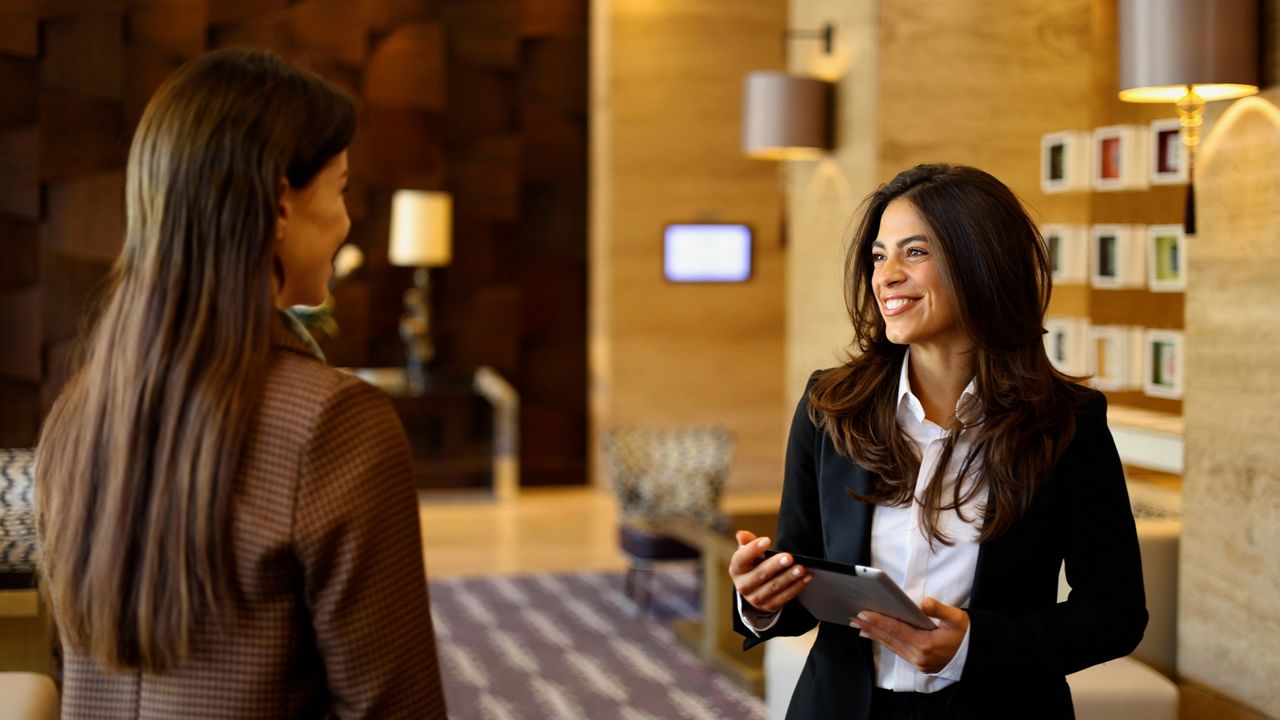
At the same time, the increasing presence of automation has raised an important question over how properties should embrace greater efficiency without losing the human touch that remains central to providing a welcoming and enjoyable experience. The answer is not found in choosing automation over people, but in identifying where technology creates the greatest operational value while ensuring staff remain empowered to deliver the personalized interactions and support that guests and residents continue to expect.
Automation Works Best When It Removes Friction
Many of the most effective automation strategies focus on eliminating repetitive, time-consuming tasks that often pull employees away from higher-value responsibilities. Tasks such as manually adjusting room temperatures, tracking housekeeping status updates, coordinating maintenance requests, managing access credentials, or locating misplaced equipment can consume significant amounts of staff time throughout the day. s
Integrated automation technologies help reduce these inefficiencies by creating more responsive and streamlined operational environments that result in 25-50 percent in labor cost savings on average. Guestroom management systems (GRMS), for example, can automatically adjust lighting, temperature, and energy usage based on occupancy status or predefined settings. Avoiding the need for any manual oversight, these systems allow properties to consistently maintain comfort standards while also supporting energy conservation goals.
Task management systems can automate service dispatching and workflow coordination, ensuring requests are routed quickly to the appropriate staff members without relying on manual communication chains. Maintenance teams can respond faster, housekeeping coordination becomes more efficient, and managers gain better visibility into operational performance across the property. In each of these examples, the aim of automation is not to replace employees but to instead remove operational friction that can prevent teams from working efficiently and delivering more attentive service.
Human Interaction Remains Central to Experiences
While automation can significantly improve operational workflows, there are still critical parts of the guest and resident journey where human interaction remains essential.
Technology may help streamline check-in processes or simplify access through mobile digital wallet-enabled keys, but it cannot fully replace the sense of empathy or reassurance that comes from meaningful human engagement. Guests still value staff members who can provide thoughtful recommendations, resolve unexpected issues with care, or create memorable moments through personalized service. Residents similarly want to feel recognized, supported, and connected to the communities where they live.
In many cases, the real value of automation is that it helps create more opportunities for these interactions to occur. Industry research indicates that front desk hotel staff were able to spend 35 percent more time directly supporting guests by automating repetitive tasks. When staff spend less time managing tasks such as manually updating room statuses, they gain more time to focus on the aspects of service that people remember most. Employees become more available to engage directly with guests and residents instead of being tied down by back-end coordination. This shift is becoming increasingly important as properties continue navigating labor shortages and rising service expectations simultaneously.
Integration Plays a Critical Role
Successfully balancing automation and human-centric service also depends heavily on how technologies work together. Disconnected systems can create fragmented workflows that ultimately increase complexity for staff rather than reducing it. Employees may be forced to navigate multiple platforms, duplicate tasks, or manually transfer information between systems, limiting the benefits automation is intended to provide.
By integrating their various technologies, properties can create a more unified operational environment where systems can share information and coordinate actions more efficiently. For example, access control technologies connected with guestroom management systems can help automate energy-saving functions when rooms become vacant. Task management platforms integrated with operational systems can automatically trigger workflows based on room status updates or maintenance events. Taking an integrated approach simultaneously simplifies operations and improve visibility, while importantly allowing employees to focus on delivering higher quality service experiences.
Recognizing Technology’s Supportive Role
As automation capabilities continue evolving, the most successful properties will be those that view technology as an operational enabler rather than a substitute for human connection. Automation is highly effective at improving consistency, reducing inefficiencies, and supporting real-time operational responsiveness. However, satisfaction and long-term loyalty are still fundamentally shaped by human experiences and relationships. Finding the right balance means using technology to handle the tasks machines perform best while allowing people to focus on building trust, delivering empathy, solving problems creatively, and creating meaningful experiences.