Cutting Costs While Elevating Guest Experience
Rising labor costs, increasing energy prices, and higher guest expectations. Hotel operators are under pressure from every direction, and many are trying to solve the problem without adding even more complexity to daily operations.

At the same time, guest expectations continue to shift rapidly toward seamless, digital-first experiences. According to research on hospitality trends made by Oracle Hospitality and Skift, travelers increasingly expect hotels to match the convenience they experience in retail, banking and air travel, particularly around mobile services and self-service technology. That shift is already reshaping investment priorities across hospitality.
Guests now expect hotels to match conveniences they’ve started to enjoy while interacting with other restaurant, retail, and e-commerce companies,
Oracle and Skift noted in their “Hospitality in 2025” report.
For many hotels, the challenge is no longer whether to invest in technology. It’s whether the technology actually simplifies operations.
Why hotel operational efficiency now impacts guest satisfaction
Many hotels still rely on disconnected systems for access control, energy management, operations and guest services. Over time, those systems create inefficiencies that are difficult to spot individually but expensive at scale.
Front desk teams spend time replacing lost keycards. Engineering responds to avoidable room issues. Staff move between platforms that don’t communicate properly. Small operational delays quietly accumulate throughout the property.
At the same time, guests increasingly expect experiences to feel instant and frictionless. Research from Hotel Report suggests mobile key adoption could exceed 70% globally in the coming years as travelers become more comfortable managing hotel stays directly from their smartphones.
That expectation is changing the relationship between hotel operations and guest satisfaction.
Guests may never see the systems running behind a property, but they immediately notice when experiences feel slow, inconsistent or unnecessarily complicated. Delays at check-in, room access issues or slow service coordination all affect how travelers perceive the stay.
Hotels creating the smoothest guest experiences today are often the same hotels operating most efficiently behind the scenes.

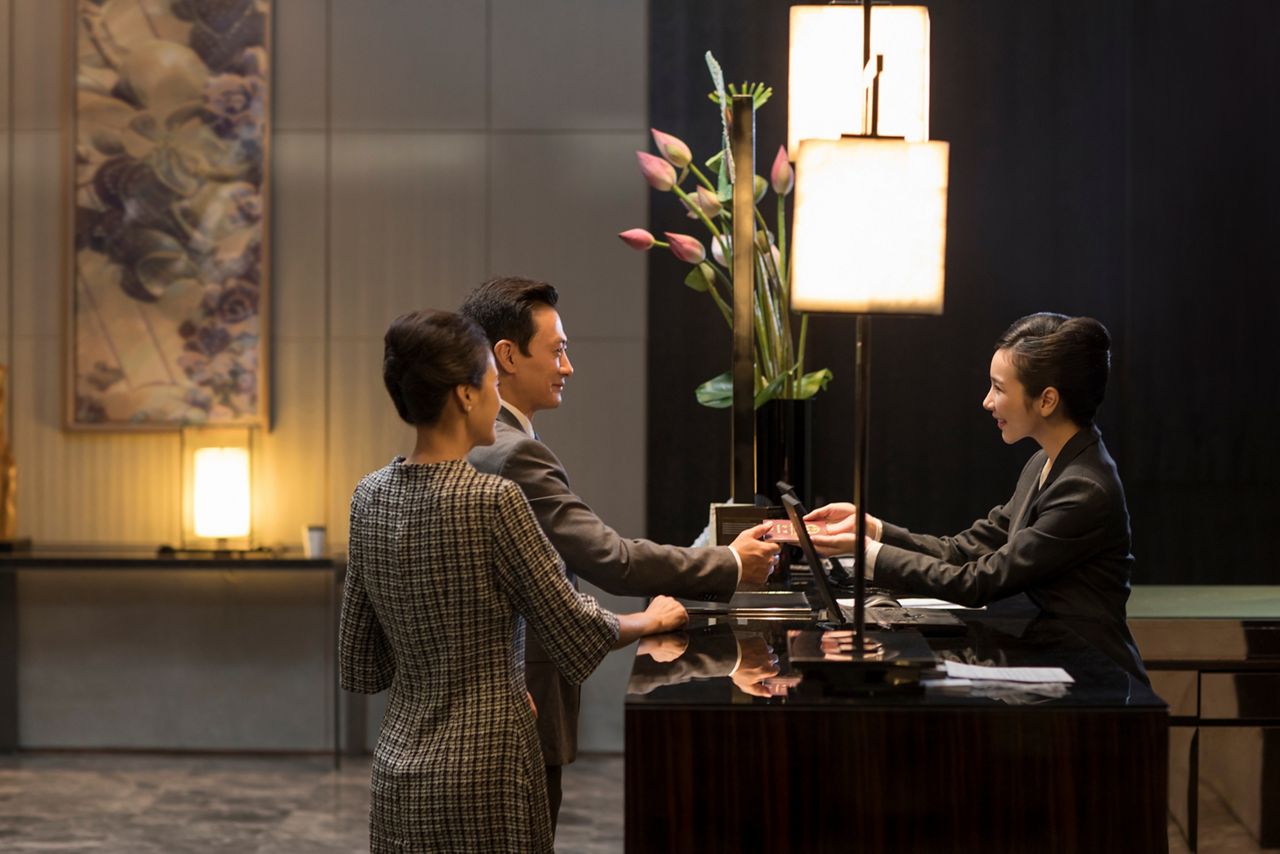
How connected hotel technology reduces operational costs
Operational efficiency in hospitality is no longer only about reducing costs. Increasingly, it’s about creating consistency across the guest journey while helping staff work more effectively behind the scenes.
When systems work together, everyday workflows become easier to manage. A guest checks out and the room status updates automatically. Energy settings adjust based on occupancy. Housekeeping receives updates instantly instead of relying on calls or manual coordination.
Instead of reacting to operational friction throughout the day, hotel teams can focus more on service quality and guest interactions.
The operational impact becomes particularly significant across larger properties or hotel portfolios where even small inefficiencies scale quickly over time.
Common operational challenges often include:
-
replacing physical keycards
-
manually updating room status
-
troubleshooting disconnected systems
-
handling avoidable guest requests
Individually, these tasks seem minor. Across hundreds of rooms and thousands of guest interactions, they become expensive operational habits that slow down teams and affect consistency.
According to Deloitte’s hospitality outlook, hotel operators are increasingly prioritizing technologies that improve efficiency while supporting more personalized guest experiences


Why integrated hotel systems improve staff productivity
Staffing shortages continue to affect hotel operations globally, forcing teams to deliver faster and more personalized service with fewer resources.
This is where integrated hotel systems create measurable value.
When access control, connectivity, energy management and operational systems communicate in real time, hotels reduce manual coordination across departments. Information moves automatically instead of relying on staff intervention at every step.
The operational benefits are often felt across the property:
-
faster communication between departments
-
fewer manual processes and repetitive tasks
-
more consistent guest experiences
-
improved staff productivity across operations
Importantly, simplifying hotel operations also improves the employee experience. Staff spend less time managing technology friction and more time focused on hospitality itself.
Over time, connected systems also create a stronger operational foundation for future growth. Instead of continuously adding standalone tools, hotels can build technology ecosystems designed to scale with the property while remaining easier to manage long term.
The future of hotel operations is connected and contactless
The future of hospitality isn’t about adding more technology for the sake of innovation.
It’s about creating connected systems that make hotel operations easier for staff and experiences smoother for guests.
As guest expectations continue to evolve, operational simplicity is becoming one of hospitality’s most valuable competitive advantages. Hotels that reduce friction internally are often the same hotels creating the most effortless experiences externally.
Because when hotel technology works properly in the background, guests rarely notice it at all. They simply notice that everything feels easier.
FAQ: Hotel operational efficiency and guest experience
Download the PDF Guide
Prefer a printable version? Download this article as a PDF for offline reading and easy sharing.


Subscribe to our blog
Stay up to date with the newest technology developments, expert tips and industry news.