Designing Smart Hotels from Day One
The smartest hotel technology decisions are often made long before a guest ever checks in.
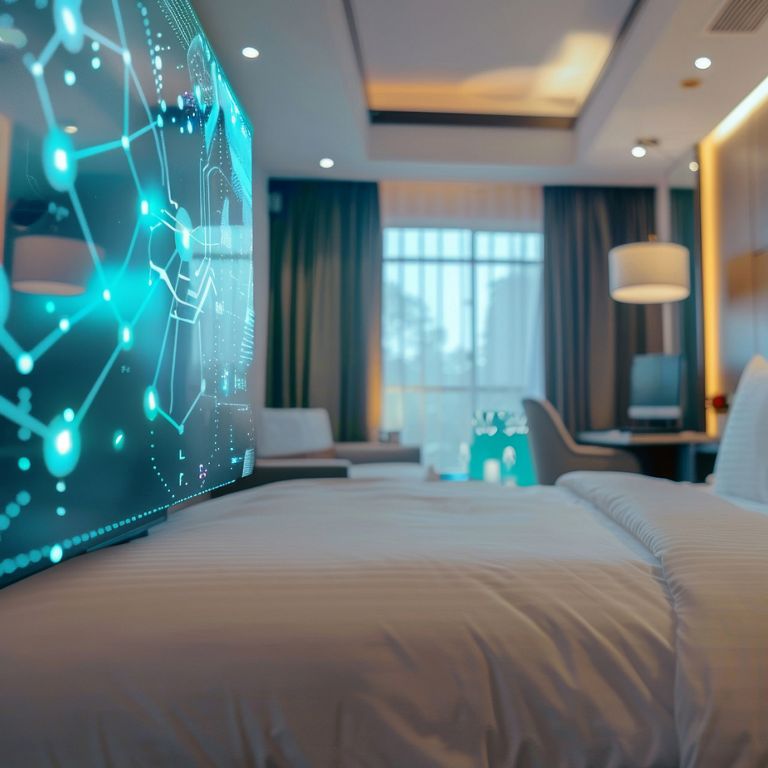
Yet in many projects, technology is still treated as something that gets layered onto a building late in the design process. Access control is discussed after floorplans are finalized. Network infrastructure is squeezed into completed designs. Smart building functionality is added as a separate workstream rather than incorporated into the overall vision.
The result is often a hotel that contains smart technology but was never truly designed to be smart.
As guest expectations, sustainability requirements and operational demands continue to evolve, that approach is becoming increasingly difficult to justify. Forward-thinking architects, developers and hotel operators are shifting their focus toward a different model: designing smart hotels from the very beginning.
Because the most future-ready buildings aren't the ones with the most technology. They're the ones where technology, operations and architecture were planned together from day one.


Why hotel technology should be part of the architectural vision
Today's hotel guests expect more than attractive design and comfortable rooms.
They expect mobile access, reliable connectivity, personalized experiences, energy-efficient environments and seamless interactions throughout their stay. At the same time, operators expect buildings to support efficient operations, lower energy consumption and long-term adaptability.
Meeting those expectations requires more than selecting the right technologies.
It requires designing spaces that can support those technologies naturally.
According to the World Green Building Council, buildings designed with long-term sustainability and operational performance in mind typically achieve stronger outcomes across efficiency, occupant experience and lifecycle value.
For architects, that means considering technology infrastructure as part of the building itself, not as an add-on.


Why retrofitting technology often creates limitations
Most design professionals have experienced it.
A project reaches an advanced stage, and suddenly new technology requirements emerge. Additional infrastructure must be accommodated. Hardware needs to be repositioned. Design details are modified to support operational requirements that were not considered earlier.
While these adjustments are common, they often introduce compromises.
Architectural intent may be diluted. Costs may increase. User experiences can become less seamless. Future flexibility may be reduced.
This challenge becomes particularly relevant in hospitality, where technology touches nearly every aspect of the guest journey.
Late-stage technology integration often results in:
-
visible hardware that disrupts design consistency
-
infrastructure limitations that restrict future upgrades
-
fragmented guest experiences across systems
-
increased implementation and maintenance costs
The most successful smart hotels avoid these challenges by embedding technology considerations into the design process from the outset.
What defines a truly smart hotel?
There is a common misconception that smart hotels are defined by individual technologies.
Mobile keys. Smart rooms. Voice controls. Automated lighting.
While these features may contribute to the experience, they are not what makes a building truly smart.
A smart hotel is one where systems, spaces and operations work together.
Guest-facing technologies are connected to operational workflows. Infrastructure supports future innovation. Sustainability goals align with building performance strategies. Design decisions improve both aesthetics and functionality.
The focus shifts from individual products to the overall ecosystem.
This is where architects can have the greatest impact.
By designing with flexibility, connectivity and operational performance in mind, they help create buildings that remain relevant long after construction is complete.
How smart building design supports sustainability goals
Sustainability is increasingly influencing hotel development around the world.
Owners, operators and investors are under growing pressure to reduce energy consumption, improve efficiency and support ESG objectives. At the same time, guests are becoming more aware of how properties manage environmental performance.
Smart building design plays an important role in meeting these expectations.
When technology is incorporated early, buildings can better support energy optimization, occupancy-based controls, intelligent resource management and long-term operational efficiency.
The benefits extend beyond environmental performance:
-
lower operating costs over time
-
improved building efficiency
-
stronger support for ESG initiatives
-
greater adaptability to future regulations and standards
For hotel owners, sustainability and profitability are becoming increasingly interconnected objectives.
Why flexibility is the most important design feature
Predicting exactly how hotel technology will evolve over the next decade is impossible.
What is possible is designing buildings that can adapt.
Future-proof hotels are not designed around today's technology trends alone. They are designed around flexibility.
Can infrastructure support future upgrades?
Can systems evolve without major renovation work?
Can guest expectations be accommodated without redesigning core building functions?
These questions are becoming central to smart hotel design.
The buildings that perform best over time are often those that were designed to accommodate change rather than resist it.
Designing for the next generation of hospitality
The hospitality industry is entering an era where design, technology and operations are becoming increasingly interconnected.
Guests expect seamless experiences. Operators demand greater efficiency. Investors want buildings that remain competitive for decades rather than years.
Meeting those expectations requires a broader perspective on what hotel design means.
The most successful projects will not be those that simply incorporate more technology.
They will be the projects where architecture creates a framework for technology, sustainability and guest experience to evolve together over time.
Because truly smart hotels are not built through technology alone.
They are designed that way from the very beginning.


FAQ: Smart hotel design and future-proof hospitality
Download the PDF Guide
Prefer a printable version? Download this article as a PDF for offline reading and easy sharing.


Subscribe to our blog
Stay up to date with the newest technology developments, expert tips and industry news.